

In the world of Gong Fu Cha, few teapots carry as much soul and natural beauty as Chai Shao (柴烧) teapots. Fired for days in wood kilns without glaze, these pieces are shaped not only by the potter’s hands but by the unpredictable dance of flame, wood ash, and time. Chai Shao represents a return to the most authentic and ancient way of creating ceramics — a philosophy where imperfection becomes beauty and fire becomes the final artist.
Chai Shao literally means “firewood firing.” Unlike modern electric or gas kilns, the teapots are placed naked (without protective saggars) inside a wood-fired kiln and fired for 4 to 5 days and nights at extremely high temperatures. During this long process, pine wood ash naturally falls onto the clay surface, melts, and creates unique, organic glazes. No commercial glaze is applied. The surface is formed entirely by the interaction of clay, flame, and ash.
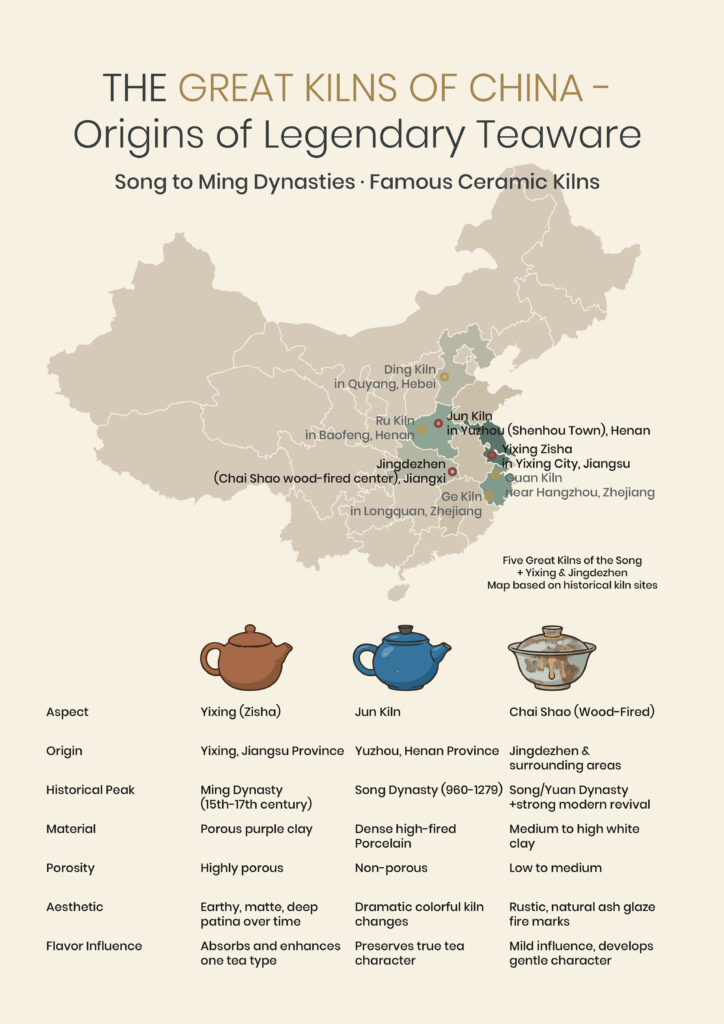
This technique has been practiced for over a thousand years, but experienced a strong revival in modern Jingdezhen and other kiln regions. Contemporary potters often speak of the kiln as a living partner rather than a tool.
Wood-firing techniques flourished during the Song Dynasty (960–1279) and Yuan Dynasty (1271–1368). Potters of that era already understood the beauty that could be created when clay and fire worked together. Many of the great Song kilns used long wood firings, and the natural ash effects were valued as part of the aesthetic. Over later centuries, many of these slow, labor-intensive methods were replaced by more controllable kilns.
In recent decades, a dedicated group of artists — especially in Jingdezhen — has revived the long wood-firing tradition with great seriousness. They accept the risk of loss (many pieces crack or are destroyed in the intense fire) in exchange for surfaces that cannot be reproduced by any other method.
A true Chai Shao firing is a multi-day commitment. The kiln is loaded carefully, then stoked continuously with pine wood for four to five days and nights. The temperature rises slowly, and the atmosphere inside the kiln shifts between oxidation and reduction. Ash from the burning wood settles on the pots and melts into a natural glaze. Direct flame leaves marks. Some areas remain matte, others become glassy.
This process embodies a deep ceramic philosophy: the potter prepares the clay with skill, then must surrender control. The final beauty is co-created by fire, wood, weather, and chance. No two firings are identical, and no two pieces from the same firing are the same. This acceptance of unpredictability is central to the appeal of Chai Shao.
Here are the most important features that define authentic Chai Shao teapots:
Chai Shao teapots perform excellently with:
They are less ideal for very delicate, fresh green teas, as the natural ash and fire character can sometimes mute the brightest floral notes. Compared with Yixing, Chai Shao is generally less “territorial” and more forgiving when used with different teas.
Chai Shao teapots offer a perfect balance: they have enough character to be interesting, but are not as exclusive as Yixing teapots. Many collectors appreciate their rustic elegance and the story each piece tells — the story of fire, patience, and nature. The surface feels both ancient and alive.
A Chai Shao teapot is more than a brewing vessel. It is a living record of fire and time — each fire mark, ash flow, and jade-green shimmer a reminder that true beauty often emerges from chaos and patience. In a fast-moving world, these teapots invite us to slow down and appreciate the natural, imperfect, and deeply authentic.
May your Chai Shao teapot bring warmth, character, and many peaceful tea moments into your life.
–> Jun Kiln vs Chai Shao vs Yixing > Blog




Chat with us