

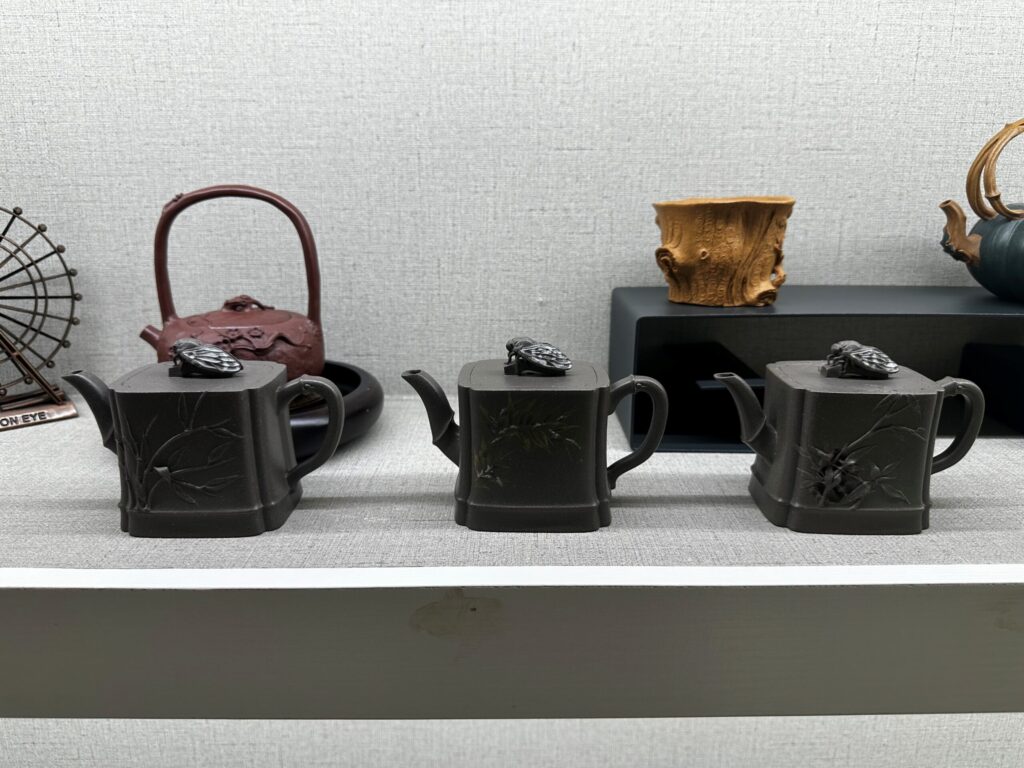
For many serious Gong Fu Cha practitioners, the Yixing teapot (宜兴紫砂壶) is considered the pinnacle of Chinese teaware. Often called the “king of teapots,” Yixing Zisha represents a perfect marriage between functionality, tradition, and quiet beauty. More than a vessel, it is a living object that slowly records the life of the tea it serves.
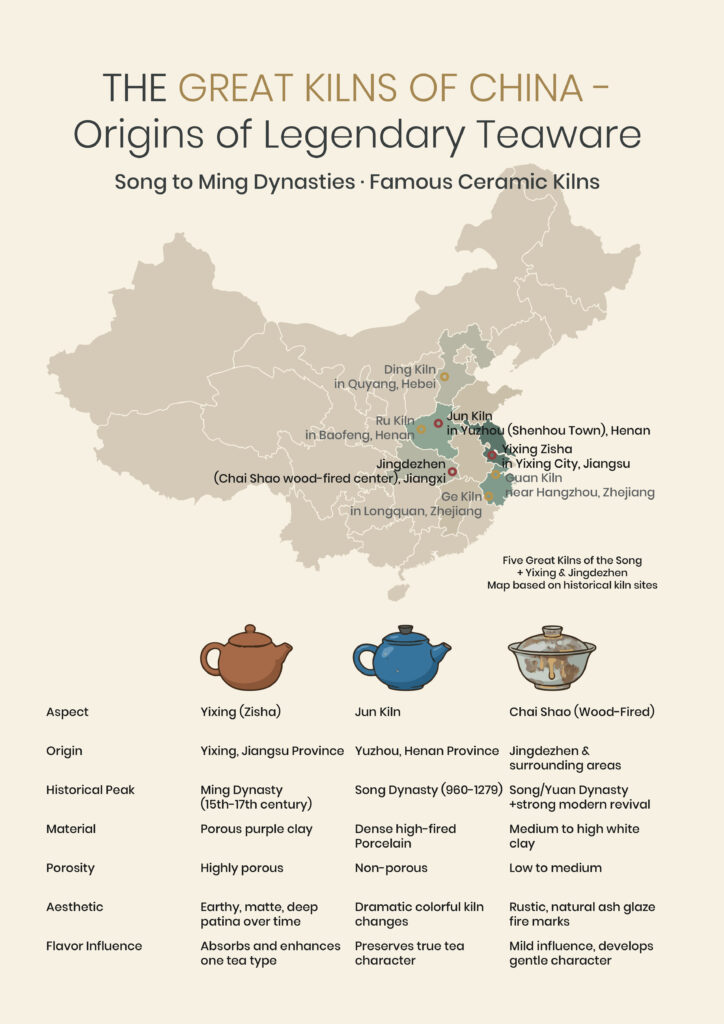
Yixing teapots first appeared during the mid-Ming Dynasty (around 1500–1600) in the town of Yixing, Jiangsu Province. The unique purple clay (zisha) found in the local Huanglong Mountain area quickly gained fame among scholars, tea masters, and literati. By the late Ming and throughout the Qing Dynasty (1644–1912), Yixing teapots had become highly prized collector’s items. Emperors, famous scholars, and poets not only used them but also commissioned pieces and wrote inscriptions on them.
Unlike porcelain, which is glazed and fired at very high temperatures, Yixing clay is left unglazed and fired at a lower temperature. This gives it a special character that has fascinated tea lovers for over 400 years. The rise of Yixing coincided with the growing popularity of loose-leaf tea and the refined practice of Gong Fu Cha. The small size of the pots was perfectly suited to the new way of brewing.
The magic of Yixing lies in its highly porous clay. The three classic families of Zisha clay — zisha (purple), hongni (red), and duanni (yellow/green) — each have different mineral compositions and slightly different properties. All are naturally iron-rich and low in organic matter, which allows them to be fired without glaze while remaining strong and beautiful.
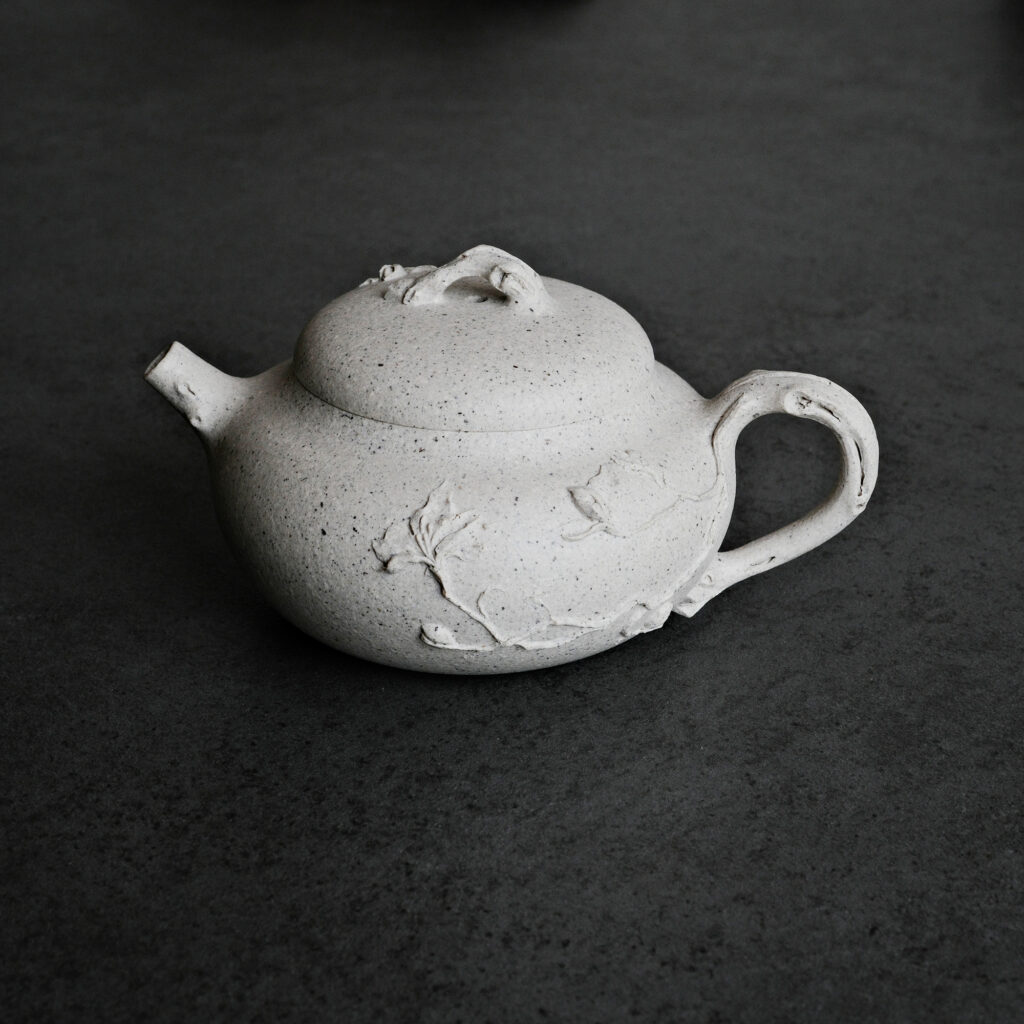
Traditional Yixing pots are made by the slab-building method (not wheel-thrown). The clay is prepared, beaten into thin slabs, and carefully assembled by hand. The lid and body are fitted with extreme precision so that the lid sits perfectly and often “sticks” slightly when the pot is full. After forming, the pot is fired once. No glaze is applied. The surface remains open and breathable.
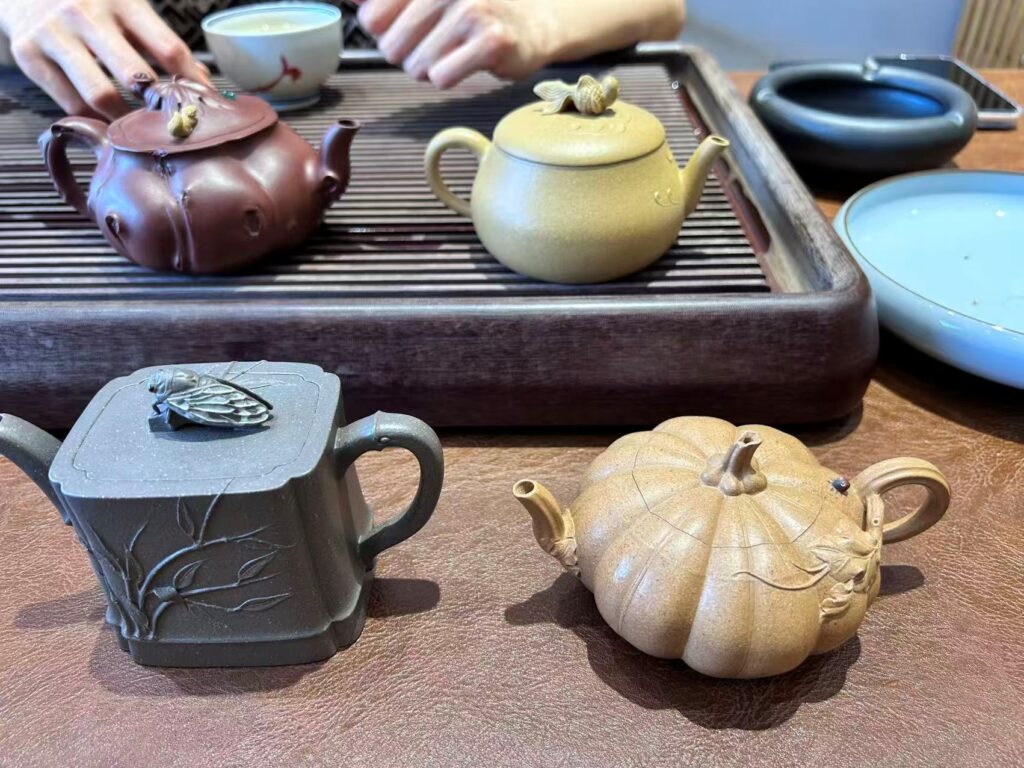
Over time, the teapot absorbs tiny amounts of tea oils, minerals, and compounds from the brewed tea. This process, called “seasoning” or “raising the pot” (养壶, yǎng hú), creates a natural patina on the surface. The clay slowly “remembers” the tea it has been used for. This is why a dedicated Yixing pot is usually kept for one type of tea only.
Key characteristics:
The philosophy behind Yixing is one of patience and relationship. The pot is not finished when it leaves the kiln. Its true character develops slowly through use. In this sense, the owner becomes a co-creator of the object.
Because Yixing teapots absorb flavors, they are usually dedicated to one specific tea type. This is their greatest strength — and also their limitation.
Best suited for:
Not recommended for:
A well-cared-for pot becomes smoother, richer in color, and more personal with time.
A well-seasoned Yixing teapot is much more than a brewing tool. It becomes a personal companion that grows more beautiful and flavorful with every tea session. In the fast-paced modern world, owning and caring for a Yixing teapot is a quiet act of patience, dedication, and respect for ancient traditions.
To brew tea in a good Yixing pot is to participate in a conversation that began over 400 years ago — between earth, fire, water, and time
–> Jun Kiln vs Chai Shao vs Yixing > Blog


Chat with us